How to Study Effectively the Night Before an Exam: A Guide for Filipino Students
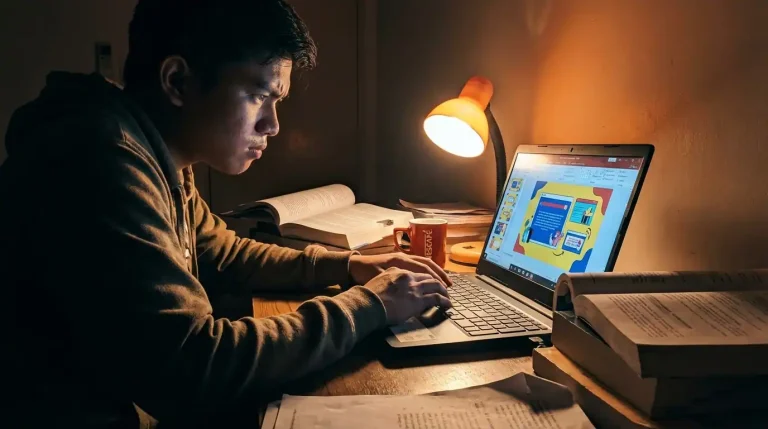
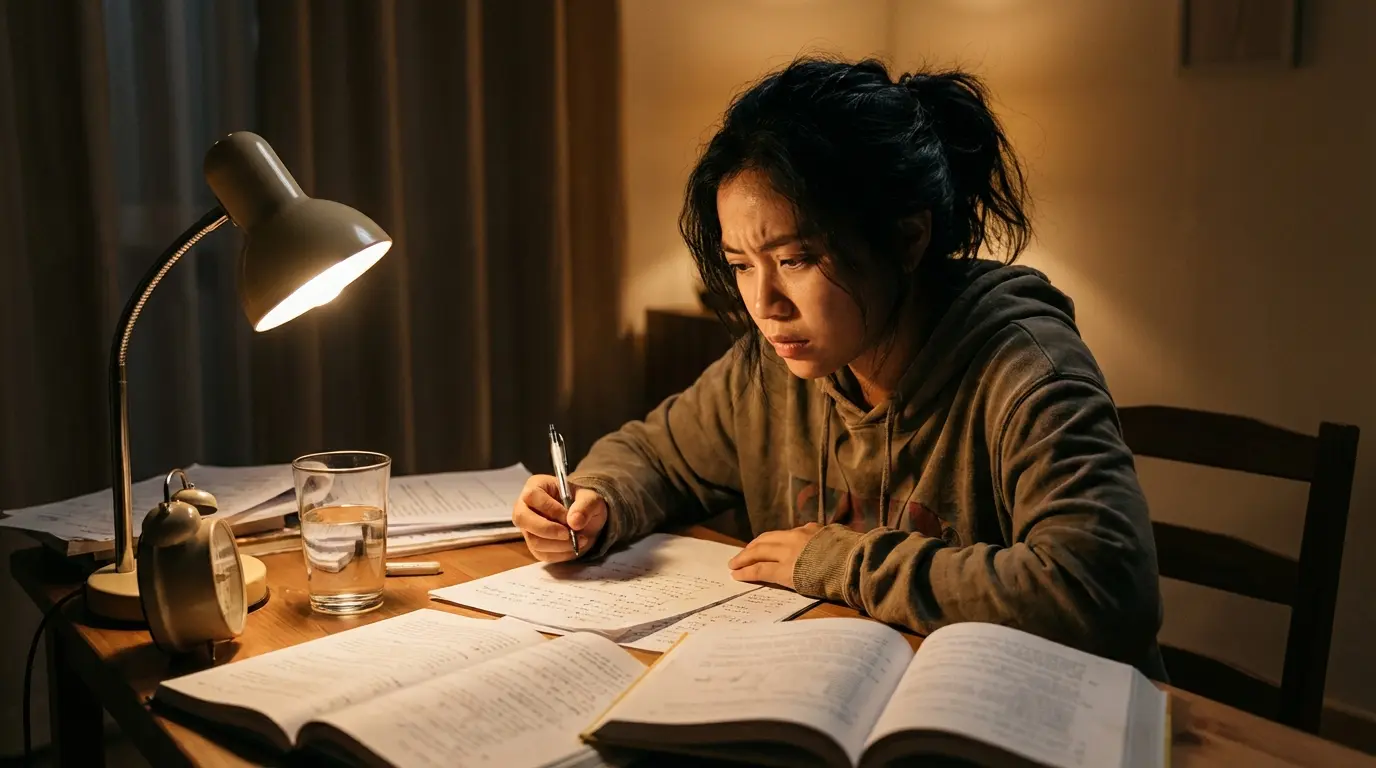
You open your notes and suddenly realize the exam is in 8 hours. Sound familiar? Maybe you meant to start studying three days ago. Maybe life got in the way. Maybe you just kept telling yourself “mamaya na” until mamaya became tonight.
Whatever happened, you are here now. And that is what matters.
This guide is not here to make you feel bad about not starting sooner. It is here to help you make the most of the hours you have left. One focused, well-planned night of studying can still make a real difference. Let’s get into it.
First Things First: Don’t Panic
Huwag mag-panic. Seriously.
Panic is the enemy of productivity. When you are anxious, your brain shifts into survival mode, and survival mode is terrible for learning. Your memory becomes less reliable, your focus scatters, and you end up rereading the same paragraph five times without absorbing anything.
Take a slow breath. Remind yourself that plenty of students have been in this exact situation and come out fine. The goal tonight is not to learn everything. The goal is to learn the right things, retain them well enough to apply during the exam, and show up tomorrow in the best condition possible.
A calm, focused mind will always outperform a panicked one. That is where we start.
What NOT to Do the Night Before an Exam
Before we talk about what works, let’s talk about the things that feel productive but will actually sabotage you.
- Do not try to study everything from scratch. If you open Chapter 1 and plan to work your way through to Chapter 12 by morning, stop. You will run out of time, lose focus, and end up retaining almost nothing. You need to be selective tonight.
- Do not pull a full all-nighter without a plan. Staying up until 5am staring at your notes sounds dedicated. It is not. An exhausted brain cannot recall information properly during an exam, no matter how many times you read something the night before.
- Do not open social media “just for a few minutes.” We all know how that ends. Those few minutes turn into an hour of scrolling, and suddenly it is midnight and you have covered two topics instead of ten.
- Do not study with friends who distract more than they help. Group chats and study groups can be great, but not the night before an exam when the conversation slowly drifts from the topic to the latest campus chismis.
- Do not drink four cups of coffee to stay awake. A little caffeine is fine. Too much will make you jittery, anxious, and unable to focus. It will also mess with your sleep, which you absolutely need tonight.

Step 1: Assess What You Need to Study
You do not have time to review everything. So the first thing you need to do is figure out what actually matters.
- Go through your past quizzes and long tests. The topics that came up before are likely to come up again. Professors tend to build on previous material, and exam questions often mirror earlier assessments.
- Check your handouts and lecture notes for anything your professor repeated or emphasized. If they said “this is important” or “this will definitely come out,” believe them.
- Message a trusted classmate and ask what topics they are focusing on. A quick five-minute conversation can save you an hour of reviewing the wrong things.
Once you have a rough idea of the high-priority topics, write them down in a short list. That list is your study map for tonight. Stick to it.
Step 2: Create a Realistic Study Plan for the Night
Do not just sit down and start reading randomly. Spend ten minutes making a plan. It feels like it slows you down, but it actually speeds everything up because you always know what you are supposed to be doing next.
Here is a sample study schedule for a 4-hour night session:
| Time | Topic | Study Method | Break |
|---|---|---|---|
| 8:00 – 8:25 PM | Topic 1: Key concepts | Active recall | 5 min |
| 8:30 – 8:55 PM | Topic 2: Formulas or definitions | Flashcards | 5 min |
| 9:00 – 9:25 PM | Topic 3: Case studies or examples | Summarize in own words | 5 min |
| 9:30 – 9:55 PM | Topic 4: Common exam question types | Practice problems | 10 min |
| 10:05 – 10:30 PM | Topic 5: Weak areas identified earlier | Mind mapping | 5 min |
| 10:35 – 11:00 PM | Full review of all topics | Quick self-testing | Done ✓ |
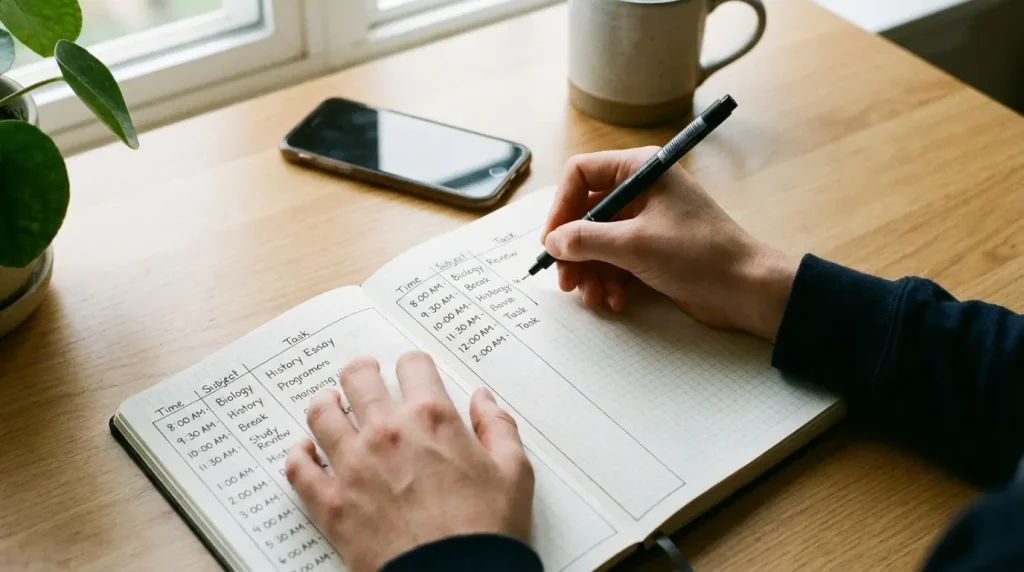
Adjust the topics based on your actual subject, but keep the structure. Short, focused sessions with built-in breaks will always beat one long, exhausting marathon of reading.
Step 3: Use the Right Last-Minute Study Techniques
How you study tonight matters just as much as what you study. These techniques are specifically effective when time is short.
- Active recall is the single most powerful thing you can do tonight. Instead of rereading your notes, close them and try to write down or say out loud everything you remember about a topic. Then check what you missed. This forces your brain to actually work, which is what makes information stick.

- Mind mapping is great for subjects with a lot of connected ideas, like history, biology, or economics. Draw a circle in the center of a page with the main topic, then branch out the key ideas connected to it. It helps you see the big picture quickly and remember how concepts relate to each other.
- Summarizing in your own words is more effective than copying notes. If you can explain a concept in simple language without looking at your book, you understand it. If you cannot, you know exactly what to review next.
- Flashcards work best for subjects that require a lot of memorization, like vocabulary, dates, formulas, or definitions. Write the question on one side and the answer on the other. Test yourself repeatedly until you can answer without hesitation.
- The “teach it to yourself” technique is exactly what it sounds like. Explain a concept out loud as if you are teaching it to someone else. This reveals gaps in your understanding that silent rereading never will. Some students even record themselves and play it back. It sounds unusual, but it works.
Step 4: Set Up the Perfect Study Environment
Where you study matters more than most people realize. A bad environment can quietly drain your focus without you even noticing.
- Find a quiet space away from noise and people who might pull your attention. Your bedroom with the door closed, a quiet corner of your house, or a well-lit study area all work well.
- Make sure you have proper lighting. Studying in dim light strains your eyes and makes you feel sleepy faster. A bright desk lamp pointed at your study materials is ideal.
- Sit at a desk or table, not your bed. Your brain associates your bed with sleep and rest. Studying there makes it harder to stay alert and easier to doze off mid-sentence.
- Put your phone on Do Not Disturb and place it face down somewhere you cannot easily reach it. Out of sight genuinely means out of mind.
- Keep a glass of water and a light snack nearby. Staying hydrated helps your brain function better. A banana, a handful of nuts, or a small sandwich is enough. Avoid anything too heavy that will make you feel sluggish.
Step 5: Take Smart Breaks
Taking breaks is not slacking off. It is part of studying well.
- The Pomodoro technique is simple and effective: study for 25 minutes, then take a 5-minute break. After four rounds, take a longer break of 15 to 20 minutes. This rhythm keeps your focus sharp and prevents the mental fatigue that comes from long, unbroken study sessions.
- During your breaks, stand up, stretch, and move around. Walk to the kitchen for water. Do a few jumping jacks. Look out the window for a minute. Physical movement increases blood flow to your brain, which actually helps with memory and focus when you sit back down.
- What you should not do during breaks: open social media, start a YouTube video, or join a group chat. These are not rest for your brain. They are just different kinds of stimulation that make it harder to refocus when your break is over.
Step 6: Know When to Stop Studying
This might be the most important step in the entire guide, and it is the one most students ignore.
You need at least 6 to 7 hours of sleep before an exam. This is not optional. During sleep, your brain processes and consolidates everything you studied. It moves information from short-term to long-term memory. Without that process, much of what you reviewed tonight will not be available to you during the exam tomorrow.
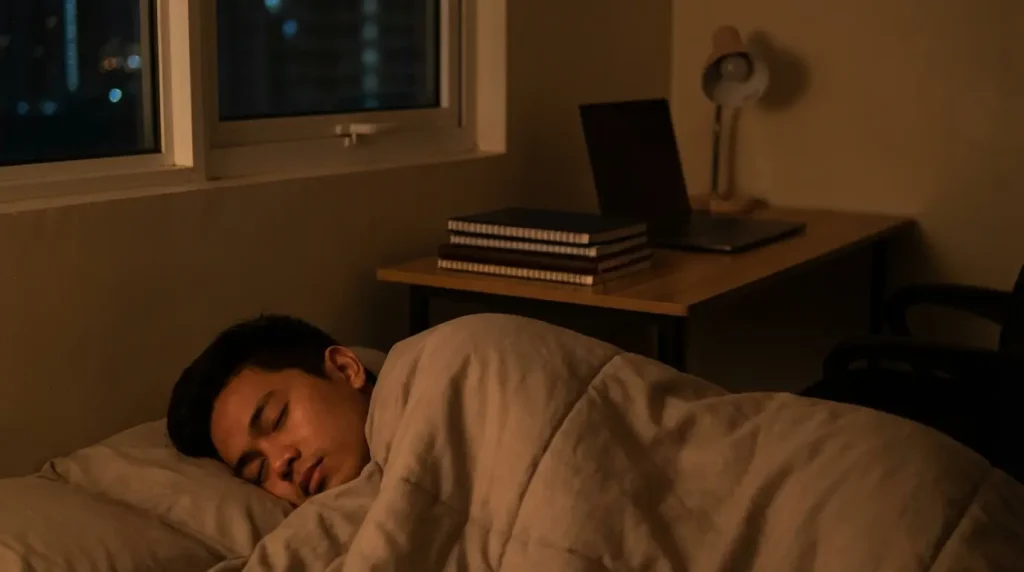
- If your exam is at 8 am, you should be in bed by midnight at the latest. If it is at 7 am, aim for 11 pm.
- Stop studying at least 30 minutes before you plan to sleep. Use that time to wind down: dim your lights, put your notes away, and let your mind settle. Studying right up until the moment you close your eyes keeps your brain activated and makes it harder to fall asleep quickly.
- The extra 30 minutes of studying you squeeze in at 2 am will not save you. A full night of sleep might.
The Morning of the Exam: Final Preparation
Bukas na ang exam. Here is how to spend the morning right.
- Do a light review for no more than 30 minutes. Go over your summary notes or mind maps. Glance at your flashcards. Do not try to learn new material at this point. You are just refreshing what is already in your head, not cramming new information on top.
- Eat a proper breakfast. Your brain runs on glucose. Skipping breakfast before an exam is one of the most common and most avoidable mistakes students make. Even something simple like rice, eggs, or a sandwich is enough to keep your energy and focus stable through the exam.
- Arrive early. Getting to the room with time to spare lets you settle in, find your seat, and calm your nerves before the paper lands on your desk. Rushing in at the last second spikes your anxiety and throws off your focus from the very first question.
Before you enter the exam room, take a slow breath and remind yourself: you prepared. You did what you could with the time you had. Kaya mo yan.
How Your Study Habits Affect Your GWA Long Term

One night of focused studying can help you pass tomorrow’s exam. But what happens when every exam becomes a last-minute scramble? Over time, that pattern will show up in your GWA.
Your General Weighted Average is built one exam at a time, one semester at a time. A grade that could have been an 88 with consistent studying becomes a 78 when you only study the night before. Multiply that across five subjects and an entire school year, and the difference in your cumulative GWA becomes significant.
The real lesson from tonight is not just how to survive one exam. It is recognizing what more consistent study habits could do for your academic standing. After your exam results come in, track how they affect your overall standing using this free GWA calculator. It helps you see exactly where you need to improve next semester, and gives you a concrete number to work toward.
Use tonight as a wake-up call, not just a survival strategy. If you want to make a real change next semester, read our guide on how to improve your grades this semester.
FAQs
Conclusion
You have everything you need to make tonight count. A clear plan, the right techniques, a decent environment, and the discipline to sleep before it is too late. That combination is more powerful than you think.
Tomorrow, walk into that exam room knowing you used your time wisely. Answer what you know. Stay calm on what you are unsure about. And when it is all over, give yourself credit for showing up and doing the work.
You prepared. You are ready. Kaya mo yan.