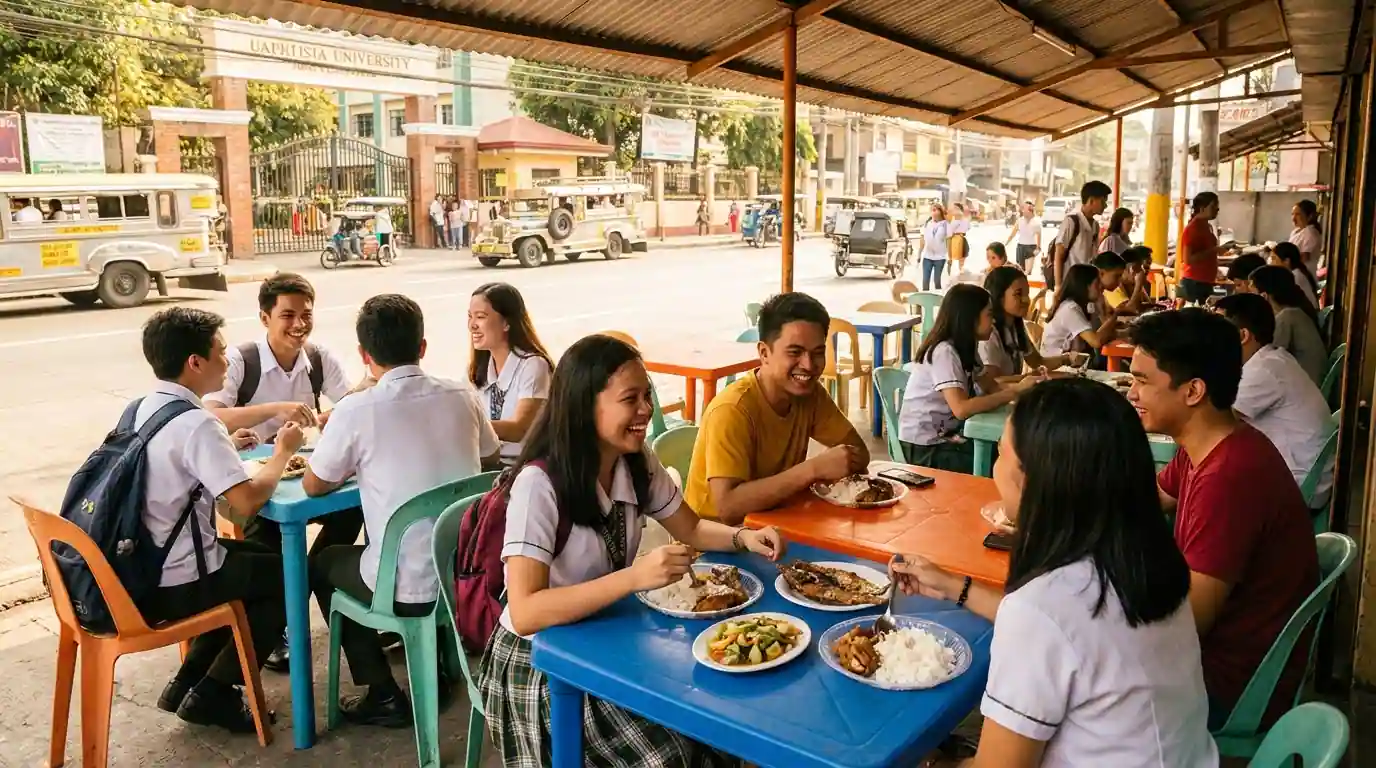
Affordable Restaurants Near Philippine Universities: Where Students Actually Eat
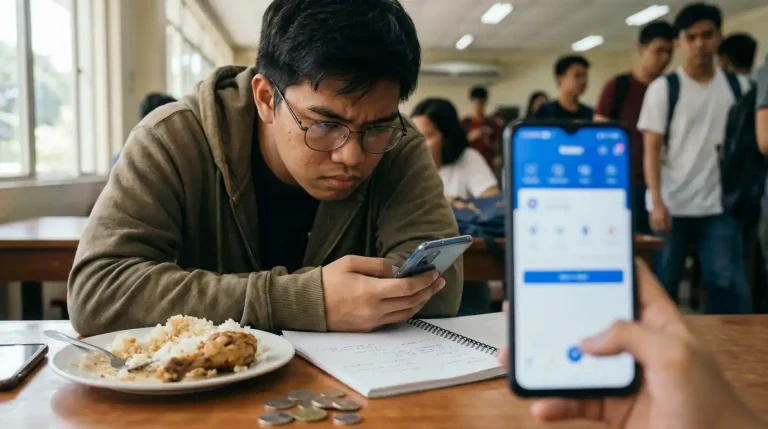
It is twelve noon, and you have just stepped out of your two-hour lecture with a stomach making sounds you hope nobody heard. You open GCash. You check the balance. You do the math fast: allowance arrives Friday, today is Wednesday, you have around 180 pesos left. You need to eat lunch. You might need dinner too. You think about the overpriced sandwich near the guard post, and you already feel tired.
This article tells you exactly where to eat near campus without destroying your budget before the week ends. Real places. Real prices. No food blog nonsense.
At a Glance: Eating on a Student Budget
Average meal budget per day: 100 to 150 pesos
Cheapest full meal option: Carinderia (60 to 80 pesos)
Best value for money: Turo-turo style restaurants
Most popular chain among students: Amber Restaurant
When to avoid eating out: The week before allowance day
Why Eating Near Campus Is a Budget Survival Skill
Where you eat every day directly controls how far your allowance goes each week. A student who pays 150 pesos per meal twice a day spends more than 2,000 pesos a week on food alone. A student who knows the right spots spends half that amount on the same calories.
Four reasons Filipino students consistently overspend on food near campus:
- Skipping breakfast and then panic-buying an overpriced lunch because the hunger got too loud
- Defaulting to convenience stores out of habit when a 7-Eleven is closer than thinking about alternatives
- Eating out with friends without any spending plan, and just ordering whatever everyone else orders
- Not knowing which nearby spots offer real value versus which ones just look cheap on the outside
Food spending is the single easiest budget category to fix, and fixing it changes everything else.
The next section breaks down every type of affordable restaurant near Philippine universities, with prices, honest pros and cons, and which ones are actually worth your limited pesos.
Types of Affordable Restaurants Filipino Students Love
The carinderia is the backbone of student dining in the Philippines and has been for decades. It is a small, usually home-style restaurant that serves Filipino dishes with rice at prices that feel almost impossibly reasonable once you have been eating convenience store food for a week.
Carinderia
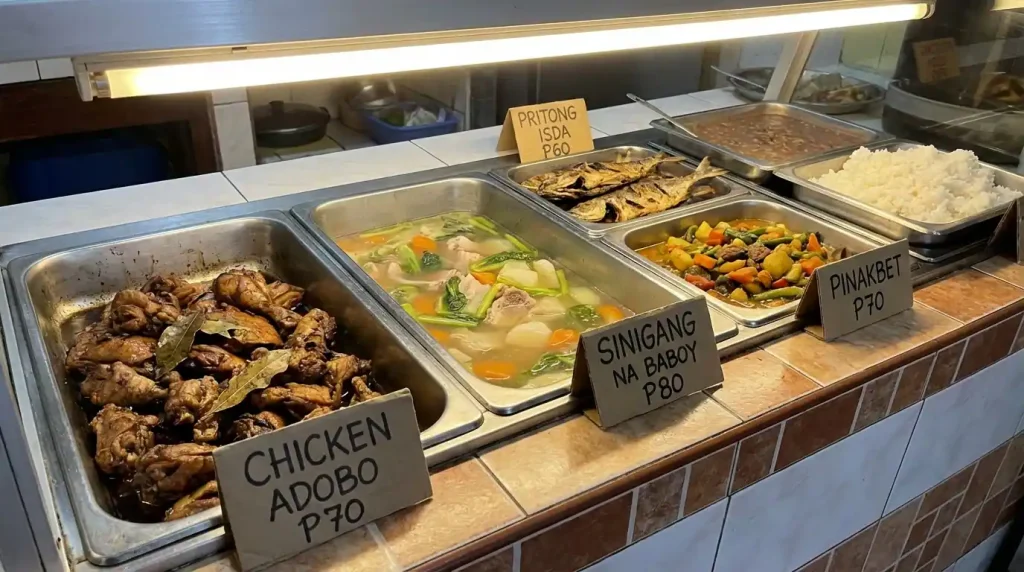
The carinderia is the backbone of student dining in the Philippines and has been for decades. It is a small, usually home-style restaurant that serves Filipino dishes with rice at prices that feel almost impossibly reasonable once you have been eating convenience store food for a week.
- Price range: 55 to 90 pesos for a full meal with rice and one or two viands
- Food variety: Adobo, sinigang, pinakbet, fried fish, monggo, and daily specials that rotate
- Best perk: Suki culture. Find one carinderia you like, eat there regularly, and the owner will often give you extra rice or a small discount without you even asking
- Watch out for: Limited operating hours. Most close by 2 pm or when the food runs out. Get there early.
Your suki carinderia is the most financially important relationship you will build in your first week of school.
Turo-Turo Style Restaurants
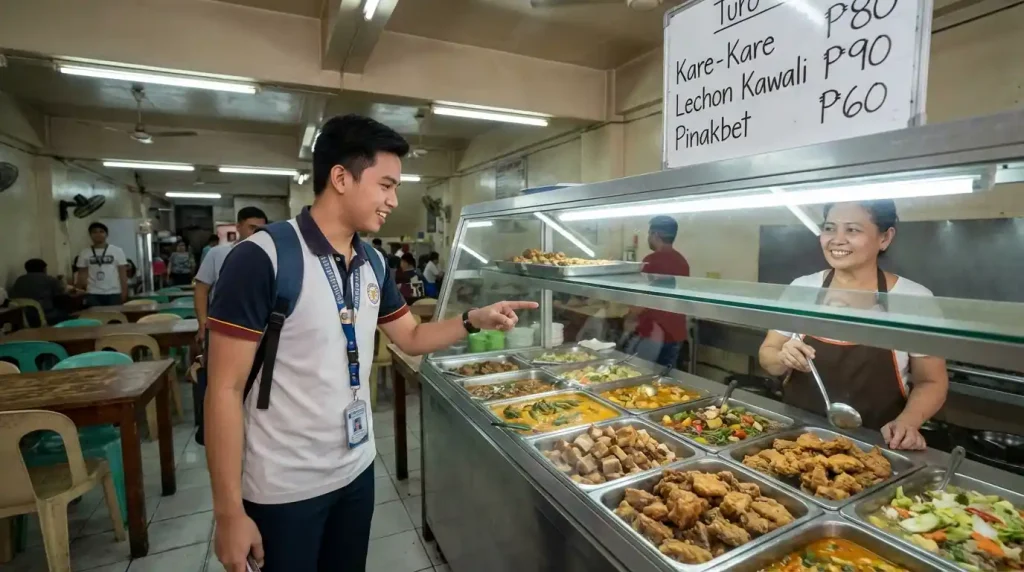
Turo-turo means “point-point,” and that is exactly how it works. You walk up to a display of pre-cooked dishes, point at what you want, and they plate it for you. It is faster than ordering from a menu and, honestly, more satisfying because you can see exactly what you are getting.
- Price range: 70 to 110 pesos per complete meal with rice
- Best for: Students who eat different things every day and do not want to commit to one dish
- Food variety: Usually, 10 to 20 dishes are available at any time. Far more variety than a carinderia.
- Student advantage: You control your portions, and you can skip expensive viands and pick two cheaper ones for the same budget
School Canteen
The school canteen is the most overlooked cheap food source near any Philippine university, mostly because students assume it is bad or boring. Some canteens genuinely are. But many university canteens serve decent food at the lowest prices you will find anywhere near campus.
- Price range: 40 to 80 pesos, depending on the school and the canteen operator
- Why students avoid it: Long lines during peak hours, limited seating, food that feels repetitive by week three
- Why you should reconsider: Some schools subsidize canteen meals specifically for students. That 50-peso meal is a deal nobody outside your school can match.
- Pro tip: Eat at 11 am or after 1 pm to avoid the worst of the lunch rush
Fast Food Value Meals
Fast food near Philippine universities is everywhere, and the temptation is real. The honest truth is that fast food makes sense for a student budget sometimes and genuinely does not make sense other times. The trick is knowing which orders are actually worth it.
- Price range: 89 to 149 pesos for value meals at Jollibee, McDonald’s, Chowking, and KFC
- When it makes sense: Late-night study sessions when nothing else is open, or when you need reliable wifi included with your meal
- Best student orders: Burger steak meals, Chowking lauriat sets, and any combo marked “value” or “savings” on the menu board
- When it does not make sense: As your daily go-to lunch. At 130 pesos per meal every day, you spend nearly 4,000 pesos a month just on food.
Street Food Stalls
Street food near campus is the most underrated budget option in the Philippines and most students walk past it twice a day without thinking. For merienda or a light meal between classes, the street food stall is your best friend and your wallet’s second-best friend after the carinderia.
- Price range: 5 to 30 pesos per item. Most items cost between 10 and 20 pesos.
- Best options near universities: Fishball, kikiam, kwek-kwek, isaw, betamax, and tokneneng
- When to use it: Merienda at 3 pm, a quick bite between classes, or when you need something filling for under 30 pesos
- Honest note: This is a supplement, not a full meal strategy. Pair it with a lighter carinderia lunch, and you still eat well all day under 100 pesos.
| Restaurant Type | Average Meal Cost (PHP) | Best For | Found Near |
|---|---|---|---|
| Carinderia | ₱55 to ₱90 | Daily lunch, suki savings | Side streets around any campus |
| Turo-Turo | ₱70 to ₱110 | Variety-seekers, lunch and dinner | Food strips near universities |
| School Canteen | ₱40 to ₱80 | Cheapest full meal, no travel time | Inside your campus |
| Fast Food Value Meals | ₱89 to ₱149 | Late nights, group hangouts | Main roads near universities |
| Street Food Stalls | ₱5 to ₱30 per item | Merienda, budget snacking | Campus gates and food strips |
| Amber Restaurant | ₱90 to ₱140 | Home-style Filipino comfort food | Commercial areas near universities |
Amber Restaurant: A Familiar Comfort for Budget-Conscious Students
There is something specific that happens when you have been away from home for a few weeks, and you eat a meal that tastes exactly like what your nanay makes. It does not matter if you grew up in Cebu or Pangasinan, or right there in Manila. Filipino comfort food hits differently when you are tired, broke, and three days away from your next allowance.
Amber Restaurant is one of the most practical answers to that specific kind of hunger. It serves Filipino home-style dishes: adobo, kare-kare, lechon kawali, dinuguan, and a rotating menu of viands that changes daily. A typical student meal at Amber costs around 90 to 140 pesos for rice and one viand, which puts it above carinderia prices but well below what you would spend at any sit-down restaurant.
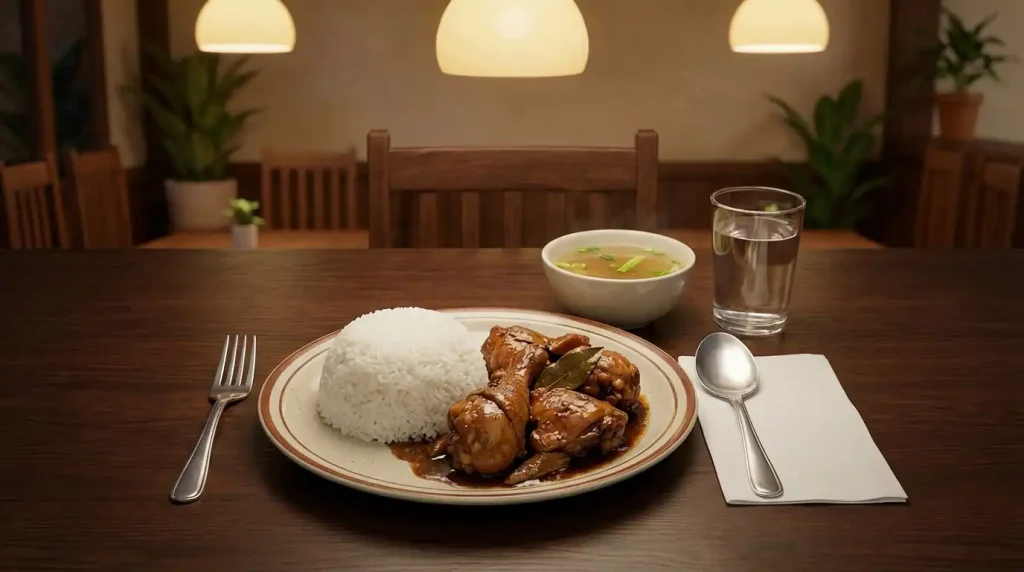
The variety is what makes it worth the slightly higher price point. Because the menu rotates, you can eat at Amber several times a week without getting bored of the same dish. That matters a lot when you are eating near the same few blocks every single day for an entire semester.
Before heading to the nearest branch, it helps to know what is on the menu and how much to budget. You can check the full Amber menu to plan your order and avoid the guessing game at the counter.
What makes Amber a practical, regular choice for students:
- Familiar Filipino dishes that genuinely taste like home cooking, not fast food versions of Filipino food
- Consistent pricing across branches, so you always know roughly what to expect before you walk in
- Quick service that actually works between classes when you have 30 minutes and not a second more
- No minimum spend, no time pressure, no judgment if you order just rice and one viand
If you need the absolute cheapest full meal today, a carinderia around the corner will still beat Amber on price. But when you want something that feels more like a proper sit-down meal without spending restaurant money, Amber is genuinely one of the better calls near any busy commercial area close to a university.
How to Make Your Food Budget Last the Whole Week
Knowing where to eat solves half the problem. The other half is having a plan before hunger makes your decisions for you. Students who plan even loosely always spend less than students who just figure it out when they are already starving.
Sample Daily Meal Budget for Students
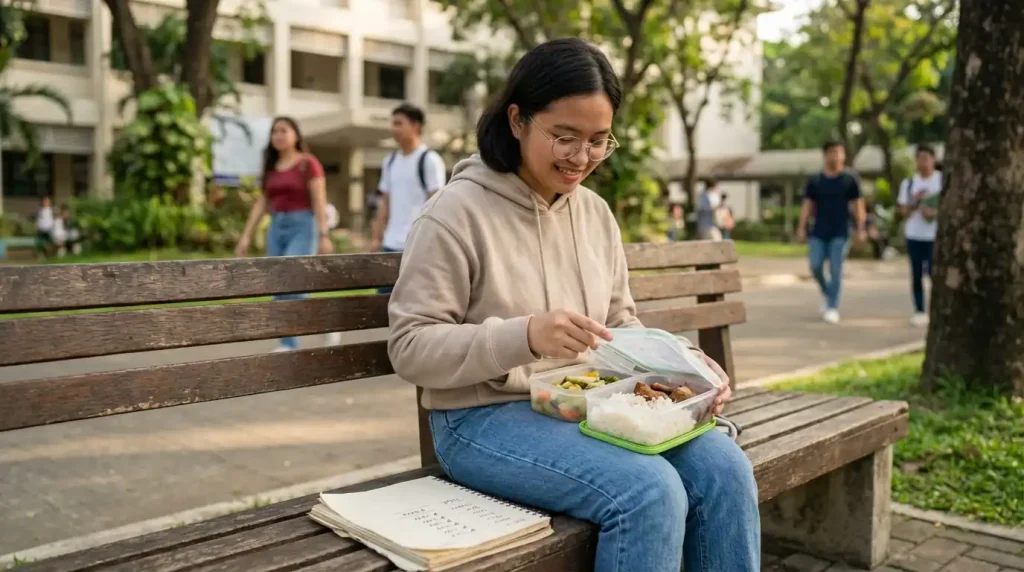
Breakfast: Pandesal and coffee from the school canteen (20 to 30 pesos)
Lunch: Carinderia meal with rice and one viand (60 to 80 pesos)
Merienda: Fishball or kikiam from street stalls (10 to 20 pesos)
Dinner: Turo-turo or baon from home (50 to 70 pesos)
Daily Total: Around 140 to 200 pesos
Five practical food budgeting strategies that actually work for Filipino college students:
- Set a daily food budget before the week starts and treat it like a hard limit, not a suggestion
- Pick two or three regular go-to spots so you stop wasting decision energy every single mealtime
- Cook at least one simple meal on weekends, even just garlic fried rice with eggs, to reset your weekday budget
- Never buy drinks from restaurants when water is available. That 25-peso iced tea adds up to 700 pesos a month.
- Track your food spending separately from everything else for just one week. You will be surprised and possibly slightly horrified at what you find.
If food is eating up most of your allowance, the problem might be bigger than just where you eat. Read our full guide on how to budget your college allowance in the Philippines for a complete breakdown of how to make your weekly allowance last without counting every single peso.
Smart Eating Habits That Save Money Without Skipping Meals
Skipping meals to save money is one of the worst strategies a student can use, and not just because hunger is miserable. Skipping breakfast or lunch directly affects concentration, mood, and energy during afternoon classes. You end up saving 60 pesos on lunch and losing two hours of effective studying.
Five smart eating habits that work for Filipino students on a tight allowance:
- Always eat breakfast. Even pandesal at 6 pesos from the street vendor near your gate counts, and it will carry you to lunch.
- Bring a baon at least twice a week. Leftover rice and whatever viand is at home costs almost nothing and removes two meal decisions from your day.
- Eat lunch before 12 pm or after 1 pm to avoid peak prices at canteens that adjust portions when the crowd is biggest.
- Identify one reliable breakfast spot near your first class so you stop skipping breakfast because you run out of time to decide.
- Treat merienda as part of your food budget, not an extra. A 20-peso merienda prevents a 150-peso panic dinner.
How to Eat Well on a Student Budget
Find your suki carinderia in the first week of school and eat there regularly
Always eat breakfast, even if it is just pandesal from the street vendor
Avoid convenience stores for full meals. They cost nearly double what a carinderia charges.
Bring a water bottle to every class. Buying drinks daily adds 500 to 700 pesos to your monthly food spending.
Cook at least one simple meal on weekends to give your budget room to breathe on weekdays
Check if your school canteen offers student meal deals or subsidized pricing you do not know about yet
Eating poorly to save money is a trade-off that costs you more in grades and energy than it saves in pesos.
Poor eating habits affect concentration and energy levels in class, and that can quietly pull your grades down over time. Track your academic performance every semester with this free GWA calculator, so you always know where you stand and can catch any downward trend before it becomes a real problem.
FAQs
Conclusion
Managing food well is not really about being cheap. It is about being smart with what you have so you can focus on everything else you came to school to do. The students who figure out their food routine early are the same ones who spend less mental energy stressing about money and more time actually studying, resting, and taking care of themselves.
You now have the spots, the prices, and the plan. Pick one carinderia near your campus this week and make it your regular. That one small decision is where a better food budget actually starts. See you at the turo-turo.