
How to Apply for DOST Scholarship Step by Step: A Complete Guide for Filipino Students
Nobody warns you properly. Sure, your parents say “college is different” and your teachers tell you to “be prepared,” but nobody really sits you down and says: this is going to shake you.
The first few weeks of college in the Philippines feel like being dropped into a completely different world. The campus is bigger, the crowd is louder, and suddenly nobody is chasing you to submit your homework. Your professor walks in, explains the course syllabus in 30 minutes, and walks out. You sit there thinking — wait, that’s it?
Yes. That’s it.
High school held your hand. College hands you a map and says good luck. And honestly? That’s what makes it both terrifying and exciting at the same time.
The first year is chaotic, overwhelming, and — if you’re being honest with yourself — one of the best years of your life. You’ll meet people who will become your lifelong friends. You’ll discover who you really are outside of the person your family and high school knew. But you’ll also cry in bathroom stalls, panic over deadlines, and question if you even chose the right course.
All of that is normal. All of that is part of it.
Academic Challenges You Will Face as a Freshman
The Jump in Difficulty from Senior High to College
Senior high school eased you in. College does not.
The subjects hit harder and move faster. A topic your high school teacher spent a week explaining? Your college professor covers it in one lecture — and expects you to have read ahead before coming to class. That first week when you realize your professor is not going to explain everything like your high school teacher did? Yeah, that hits different.

Self-studying becomes non-negotiable. You can no longer rely on what was discussed in class alone. You need to read ahead, review after, and fill in the gaps yourself. Some practical tips for adjusting:
- Read the syllabus on Day 1 and identify the heavy topics early
- Don’t skip classes in the first few weeks — this is when foundations are built
- Form a study group with classmates you trust
- Use YouTube, Khan Academy, or subject-specific resources to supplement your notes
The adjustment takes time. Give yourself grace, but don’t use it as an excuse to coast.
Understanding Units, GWA, and Academic Standing
In college, your subjects are measured in units — typically 3 units per academic subject and 1–2 units for lab classes. Your total units per semester usually range from 18 to 24 depending on your program.
Your General Weighted Average (GWA) is the weighted average of all your final grades across all subjects, factoring in the number of units each subject carries. It’s not just a number — it determines your academic standing, your eligibility for scholarships, and in some schools, whether you stay enrolled at all.
A GWA of 1.0 is the highest in most Philippine universities. A GWA above 3.0 in many schools puts you on academic probation. Falling into probation means you’re one bad semester away from being asked to leave your program.
One thing most freshmen overlook is tracking their GWA from the very first semester. Use this free GWA calculator to monitor your grade average and make sure you stay on track academically right from the start. You don’t want to wait until grades are released to realize you’re dangerously close to the line.

Track it every grading period. Not just at the end of the year.
Managing Multiple Subjects and Deadlines
Six to eight subjects. Each with its own requirements, quizzes, long exams, and major projects. Welcome to college.
The students who struggle most in first year are usually not the ones who lack intelligence — they’re the ones who lack a system. Here’s how to build one:
- Use a planner or app (Google Calendar, Notion, or even a physical notebook) to list all deadlines at the start of each month
- Prioritize by weight — a major exam worth 40% of your grade matters more than a 5-point quiz
- Break big requirements into smaller tasks so you’re not cramming a 2,000-word paper the night before it’s due
- Set personal deadlines 2 days before the actual deadline as buffer
The last-minute trap is real. And once you fall into it in college, it’s very hard to climb out.
Social Challenges of First Year College
Making New Friends as a Freshman
Here’s the truth: almost everyone in that classroom on the first day is just as nervous as you are. Nobody admits it, but the person sitting next to you, looking confident scrolling their phone? They’re also hoping someone talks to them first.

Making friends in college takes intentional effort, especially if you’re introverted. Some ways to break the ice:
- Ask a classmate about the syllabus or the professor’s grading system — instant conversation starter
- Sit in the middle rows during class (not too front, not too back) — it’s the social sweet spot
- Attend org fairs with curiosity, not pressure — great place to meet people with similar interests
- Show up consistently. Friendship in college is built on familiarity
There’s a difference between real friends and org friends and tambay friends. Real ones show up when things get hard. You’ll figure out who they are by second semester.
Joining Organizations — Yes or No?
Joining an org as a freshie is not required, but it can genuinely shape your college experience for the better — if you choose wisely.
Pros of joining an org:
Pros of joining an org:
- Builds soft skills: leadership, communication, teamwork
- Expands your network beyond your department
- Gives structure and purpose outside academics
- Can open doors for internships and career connections
Cons to watch out for:
- Some orgs demand too much time — practices, meetings, events every week
- Can easily pull your GPA down if not balanced properly
- Toxic org culture exists in some groups — watch out early
Our advice: join one org in your first year. Just one. See how you manage it alongside your academics before adding more. And never join an org just because your friends are joining — join because it genuinely aligns with what you want to grow in.
Dealing With Homesickness, Especially for Probinsyano Students
If you moved from the province to study in Manila, Cebu, or any other major city — this section is especially for you.
Homesickness in college is not weakness. It’s the natural result of leaving everything familiar: your family, your food, your bedroom, your life as you knew it. It hits hardest in the evenings, on weekends, and during sembreak when your dormmates go home and you stay.
Here’s what helps:
- Keep communication open with your family — regular calls go a long way
- Build a routine that fills your evenings productively so the silence doesn’t swallow you
- Find a dormmate or blockmate you’re comfortable with — someone who becomes your college family
- Explore your new city slowly and make it feel like home — find your favorite carinderia, your go-to study spot, your Sunday church
And if it gets too heavy — if you feel persistently sad, isolated, or unable to function — visit your school’s guidance office. It’s free, it’s confidential, and it’s exactly what it’s there for. There is no shame in asking for help.
Financial Challenges of College Life
Budgeting Your Allowance as a College Student
Whether your parents give you ₱500 or ₱2,000 a week, the challenge is the same: it never feels like enough. And yet some students manage to save while others run out by Wednesday.
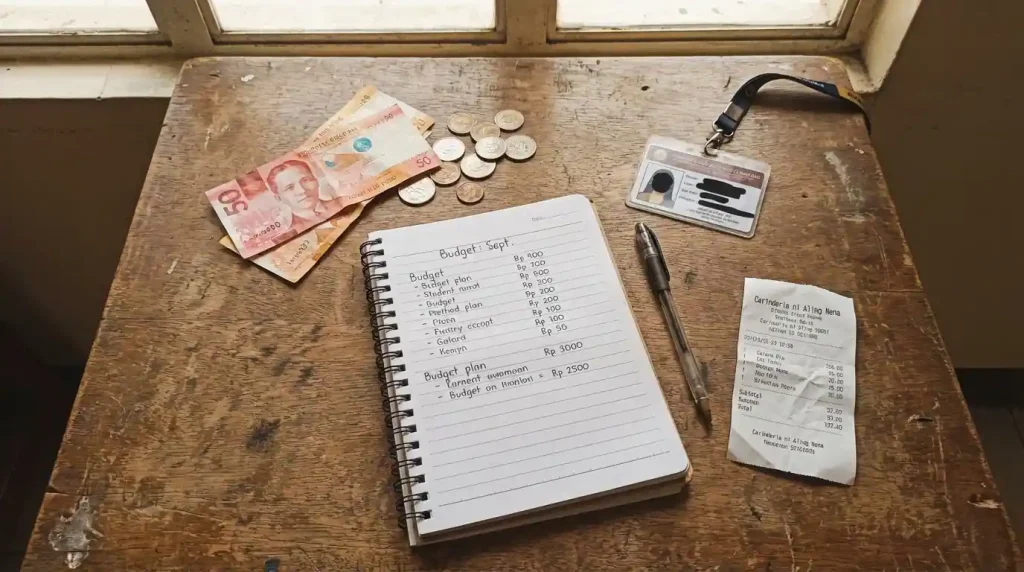
The difference is almost always intentional budgeting. Here’s a simple approach:
- Allocate first: transportation, food, and school supplies come before anything else
- Know your cheap food spots near campus — carinderias, student canteens, and turo-turo spots are your best friends
- Avoid buying coffee shop drinks daily — that ₱150 iced coffee five times a week is ₱3,000 a month
- Track your daily expenses in a notes app, even informally — awareness alone changes behavior
Lifestyle inflation is a real trap in college. Your block mates start ordering Jollibee every day, buying new clothes for every event, and somehow you feel the pull to do the same. Don’t. Your budget is not theirs.
Finding Ways to Earn While Studying
You don’t have to wait until graduation to earn money. Many Filipino college students already do, and so can you.
- Freelancing — graphic design, content writing, video editing, social media management. Platforms like Upwork, OnlineJobs.ph, and Facebook groups are full of opportunities
- Online selling — reselling thrifted clothes, snacks, or school supplies within your campus
- Selling notes and reviewers — if you’re a good note-taker, classmates will pay for organized notes before exams
- Part-time jobs — BPO evening shifts, tutoring younger students, or working in campus offices
- Scholarships and grants — CHED, DOST, Iskolar ng Bayan, and private foundation scholarships don’t just ease tuition — they validate your hard work as an iskolar
Earning while studying teaches discipline and time management in ways no subject ever will. Just make sure your grades don’t suffer for it.
Practical Tips for Surviving and Thriving in First Year
Build a Routine Early
Successful freshmen don’t rely on motivation — they rely on routine. Motivation comes and goes. A schedule shows up every day.

Here’s a sample weekly routine as a starting point:
| Day | ☀ Morning | ☂ Afternoon | ☾ Evening |
|---|---|---|---|
| Monday | Classes | Review notes from AM | Read ahead for Tuesday |
| Tuesday | Classes | Org meeting or library | Light review + rest |
| Wednesday | Classes | Study group session | Deadline check + planner update |
| Thursday | Classes | Review + requirements | Self-study / online research |
| Friday | Classes | Wind down, review the week | Free time / social |
| Saturday | Catch-up reading | Laundry, errands | Rest or light review |
| Sunday | Church / rest | Meal prep / budget review | Prepare for the week ahead |
Adjust based on your actual schedule, but the point is: have a plan. Winging it every day is exhausting and unsustainable.
Learn to Say No
College is full of invitations — gimmicks, group chats that never sleep, events every other weekend, favors from org mates who always seem to need something.
Saying no is a skill. And first year is the perfect time to practice it.
You don’t have to explain yourself every time. “I can’t, I have an exam” is a complete sentence. “I need to rest” is a valid reason. Choosing your priorities over people-pleasing is not selfishness — it’s self-respect.
Say no respectfully, consistently, and without guilt. The right people will understand.
Take Care of Your Mental Health From Day One
First year college is one of the most common trigger points for anxiety, burnout, and depression among Filipino students. The pressure to perform, to fit in, to justify the sacrifices your family made — it builds up quietly until it doesn’t.

Watch for these signs in yourself:
- Persistent exhaustion that sleep doesn’t fix
- Loss of interest in things you used to enjoy
- Difficulty concentrating or making decisions
- Feeling disconnected from everyone around you
Most Philippine universities have free mental health services through their guidance and counseling offices. UST, UP, DLSU, Ateneo, and most state universities have trained counselors available to students. Use them. You don’t have to be in crisis to seek support.
Mental health is not separate from academic success. They are the same conversation.
Build a Good Relationship With Your Professors
Your professors are not your enemies — even the strict ones. In fact, the strict ones often respect students who show genuine effort the most.
Here’s how to build that relationship:
- Attend classes consistently. Professors notice who shows up
- Visit their consultation hours — even once — to clarify something from a lecture
- Be polite and professional in emails. Start with “Good afternoon, Sir/Ma’am”
- Don’t be the student who only appears when they need a grade appeal
A professor who knows your name and respects your effort can become a reference letter, a thesis adviser, or a career connection down the road. Don’t underestimate that.
What Successful First Year Students Do Differently
The students who finish first year strong aren’t necessarily the smartest in the room. They just make better habits earlier. Here’s what sets them apart:
- They track their grades and GWA consistently — they don’t wait for report cards to tell them where they stand
- They ask for help before it’s too late — from professors, tutors, blockmates, and counselors
- They balance academics with personal growth — they join one org, make genuine friends, and invest in themselves
- They treat college as preparation for real life — not just a degree to survive
- They show up even when they don’t feel like it — especially when they don’t feel like it
The gap between surviving and thriving is usually just consistency. Small good decisions, repeated daily.
FAQs
Conclusion
First year is hard. Nobody honest will tell you otherwise. But it is also the year you figure out what you’re made of — not because things went smoothly, but because they didn’t, and you kept going anyway.
You are more capable than you think. The campus will feel less foreign. The professors will become familiar. The deadlines will become manageable. And one day, probably around second semester, you’ll realize you actually know what you’re doing.
That day is coming. Just get there.